Category: Blog

  • GROW Pasco 2025: Empowering Our Business Community Together

    Yesterday, the 5th Annual GROW Pasco event unfolded at the Saint Leo University Wellness Center, bringing together entrepreneurs, business leaders, and innovators from across Pasco County. Hosted by SMARTstart, the event aimed to educate and connect business owners, fostering a community of growth and collaboration.

    A day filled with 15 insightful breakout sessions led by over 30 business professionals covered diverse topics, including digital trends, artificial intelligence, marketing strategies, and local business resources. These sessions provided attendees with valuable insights and strategies to navigate the evolving business landscape.

    A highlight of the day was the keynote presentation by Johnny Crowder, founder and CEO of Cope Notes. As a suicide and abuse survivor, TEDx speaker, and certified peer recovery specialist, Johnny shared their journey and emphasized the importance of mental health and wellness in the business community.

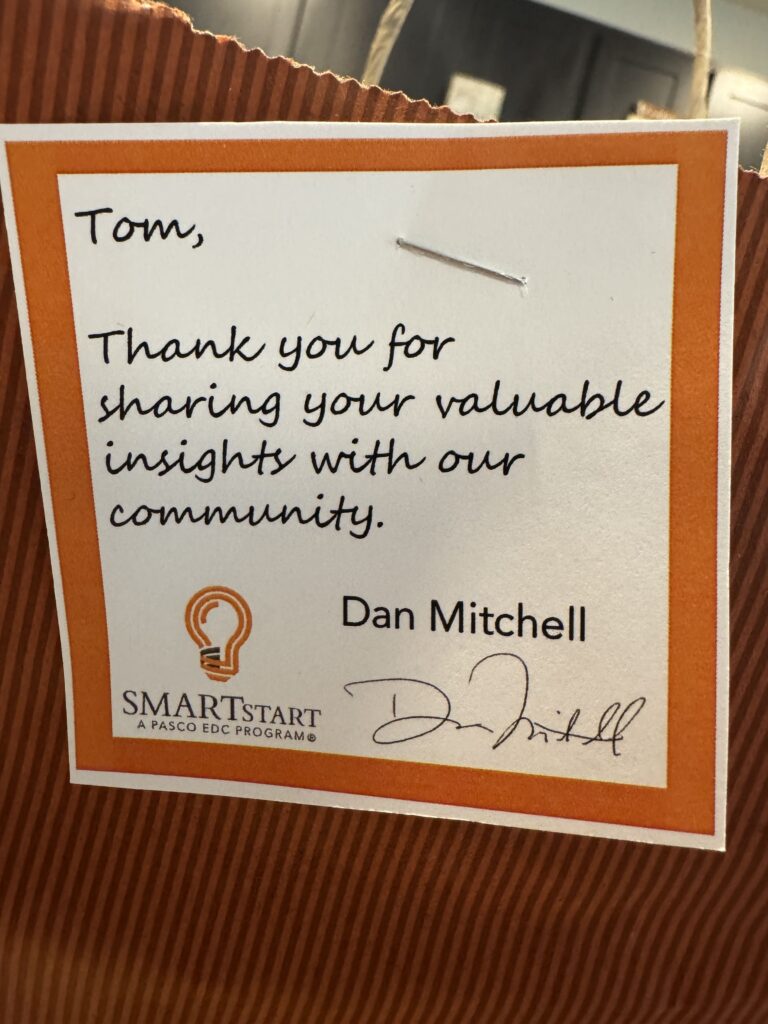
    Participating as a panel speaker, I had the privilege of discussing technological impacts on small businesses. I am incredibly grateful to my fellow panel members and all the speakers throughout the day for their invaluable contributions. Your expertise and dedication have made a significant impact in driving our community forward.

    We are thrilled to announce that events like GROW Pasco 2025 are made possible through the generous support of our sponsors. We are deeply grateful to our title sponsor, E-Assessment, Inc., and our breakout session sponsors, including the Pasco County Board of County Commissioners and Saint Leo University. Your commitment to fostering entrepreneurship and growth in our community is truly appreciated.

    We warmly invite all attendees and community members to share their experiences and photos from today’s event. Use the hashtags #GROWPasco2025, #EmpowerPasco, and #PascoStrong to connect with others and keep the conversation going. We encourage you to continue sharing your experiences and ideas, contributing to the vibrant business community we are building together.

    For those inspired to take an active role in our business community, consider engaging with the Pasco Economic Development Council (Pasco EDC) and SMARTstart programs. These initiatives offer resources, networking opportunities, and support to help you grow your business and contribute to our vibrant community.

    As we reflect on the insights gained and connections made today, let’s continue to support each other in our entrepreneurial journeys. Together, we can build a thriving business ecosystem in Pasco County. Join us in shaping the future of Pasco County. Stay tuned for upcoming events and opportunities to get involved. Together, we are #PascoStrong.


  • 10 Steps to Prevent a Data Breach

    10 Steps to Prevent a Data Breach

    Data breaches can severely impact your business, costing you both money and trust. Let’s explore how to prevent them.

    What is a data breach?

    A data breach occurs when someone steals information such as names, emails, or credit card numbers. This is detrimental to both your customers and your business.

    Why should you care about data breaches?

    Data breaches are serious issues. They can result in financial losses, erode customer trust, and even lead to fines. It’s crucial to prevent them from happening.

    How do you prevent a data breach?

    Here are ten steps to help keep your data safe:

    1. Use strong passwords: Create long, complex passwords that are difficult to guess. Include letters, numbers, and symbols, and avoid using the same password for multiple accounts.
    2. Update your software: Always keep your computer programs updated. Updates often patch security vulnerabilities. Set your computer to update automatically.
    3. Train your employees: Educate your employees on data security. Teach them to recognize phishing emails and avoid clicking on suspicious links.
    4. Use encryption: Encryption scrambles your data, making it readable only to those with a special key. Use encryption for sensitive information.
    5. Limit access to data: Only grant access to data that employees need for their work. Not everyone needs to know everything.
    6. Create backups of your data: Regularly create copies of important information and store them in a secure location. This helps in case of data theft or destruction.
    7. Use a firewall: A firewall acts as a guard for your computer, blocking malicious attempts to access your system. Always keep your firewall enabled.
    8. Be careful with emails: Many data breaches start with phishing emails. Avoid opening emails from unknown senders and never click on suspicious links.
    9. Protect your Wi-Fi: Use a strong password for your Wi-Fi network and avoid using default passwords. Update your Wi-Fi password regularly.
    10. Have a plan: Prepare a response plan for data breaches. Know whom to contact and what steps to take. Conduct practice drills to ensure readiness.

    Even with robust plans, data breaches can still occur. If one happens, act quickly. Inform your customers about the breach as soon as possible, fix the issue that caused it, and use the experience to strengthen your security.

    At what frequency is security checked?

    Regularly review your security measures, at least once a month. Stay informed about new threats and the latest methods to keep your data safe.

    Can small businesses be targets for data breaches?

    Yes, small businesses are often targeted by hackers who perceive their security to be weaker. Regardless of size, ensure your business is prepared.

    What are some tools that can prevent data breaches?

    Investing in tools to prevent data breaches may seem costly, but it’s less expensive than dealing with a breach. Consider it insurance for your data, making the investment worthwhile.

    How much does it cost to prevent a data breach?

    While the cost of prevention can be high, it is significantly lower than the cost of fixing a breach. Think of it as an investment in your business’s safety.

    Stay Safe and Secure

    Data safety is crucial for protecting your business and customers. Implement these steps to prevent data breaches and stay vigilant against new threats. If you need assistance, consult an expert to ensure your data remains secure. Don’t wait until it’s too late—start protecting your data today.

  • 7 Ways Using AI for Work Can Get Complicated

    7 Ways Using AI for Work Can Get Complicated

    AI is revolutionizing the way we work. It can simplify many tasks, but it also brings its own set of challenges. Let’s explore some ways AI can make work more complex.

    What is AI and how does it affect work?

    AI, or Artificial Intelligence, refers to computer systems that can perform tasks typically requiring human intelligence. It can support a wide range of jobs, from writing and data analysis to creating art. However, it’s not infallible and can sometimes go awry.

    Where can AI go wrong?

    Incorrect Information

    AI can sometimes provide inaccurate information. It might mix up facts or rely on outdated data, leading to significant issues in the workplace.

    Weird Outputs

    AI can also produce strange results. It might generate nonsensical text or bizarre images, wasting time and causing confusion.

    Can AI be biased?

    Yes, AI can be biased. It learns from data provided by humans, and if that data contains biases, the AI will too. This can result in unfair decisions in the workplace.

    How does AI affect jobs?

    Job Loss

    There are concerns that AI might replace human jobs. It can perform certain tasks more quickly and cost-effectively than humans, potentially reducing job opportunities in some industries.

    New Skills Needed

    AI also necessitates new skills. Workers need to learn how to collaborate with AI, which can be challenging for some.

    Is AI always reliable?

    No, AI is not always reliable. It can malfunction or break down, posing significant problems if workers depend on it and it fails.

    How does AI affect teamwork?

    AI can change the dynamics of teamwork. Some tasks may become solo endeavors with AI, potentially reducing collaboration and creativity.

    What about privacy and AI?

    AI requires vast amounts of data to function effectively, raising privacy concerns. Workers might worry that AI will access their personal information or monitor their work habits.

    Legal Issues

    AI can also create legal challenges. Questions arise about the ownership of AI-generated work and concerns about AI making biased decisions.

    How can we use AI safely at work?

    To use AI safely at work:

    • Carefully check AI outputs
    • Keep humans in charge of major decisions
    • Train workers to use AI effectively
    • Establish clear guidelines for AI use
    • Stay informed about AI regulations

    Get Started With AI at Work

    AI can be a valuable tool at work, but it’s not perfect. We must use it cautiously. If you have questions about integrating AI into your job, contact us today. We can help you use AI in a smart and safe way.

  • How to Minimize Ransomware Damage

    How to Minimize Ransomware Damage

    Ransomware has become a significant problem for many individuals and businesses. It can lock up your files and demand payment to release them. This article will guide you on how to protect yourself from ransomware and what to do in case of an attack.

    What is Ransomware?

    Ransomware is a type of malicious software that infiltrates your computer, locks your files, and demands payment to unlock them. This can be both frightening and costly.

    How does ransomware work?

    Ransomware typically enters through email or malicious websites and can spread through networks. Once inside, it encrypts your files with strong codes, and you receive a message demanding payment.

    How does Encryption Work?

    Encryption uses algorithms and keys. An algorithm is a set of rules for solving problems, and a key is like a password that unlocks the encrypted message.

    How can you prevent ransomware attacks?

    There are several ways to prevent ransomware before it causes harm. Here are some key steps:

    Keep your software up to date

    Always keep your computer and programs updated. Updates often fix vulnerabilities that ransomware exploits.

    Use good antivirus software

    Invest in strong antivirus software, keep it turned on, and ensure it is updated. It can detect many types of ransomware.

    Be careful with emails

    Avoid opening emails from unknown senders and do not click on links or download files unless you are certain they are safe.

    Back up your files

    Regularly back up your most important files and store them on a separate device. This way, if ransomware locks your files, you will still have copies.

    What do you do if you get ransomware?

    If you suspect you have ransomware, don’t panic. Here’s what to do:

    Disconnect from the network

    Immediately disconnect your computer from the internet to prevent the ransomware from spreading or worsening.

    Don’t pay the ransom

    Experts advise against paying the ransom as there is no guarantee you will get your files back, and paying encourages more attacks.

    Report the attack

    Report the attack to the police and your country’s cybersecurity center. They can assist and use the information to prevent future attacks.

    Use your backups

    If you have backups, restore your files from them. That’s what backups are for, after all.

    How can businesses protect themselves?

    Businesses should take additional steps to stay safe. Here are some suggestions:

    Train your employees

    Educate your employees about ransomware, providing examples of what to watch out for and what to do if they encounter something suspicious.

    Limit access to key files

    Restrict access to essential files to only those who need it for their job. This can limit the spread of ransomware.

    Have a plan ready

    Develop a strategy in case of a ransomware attack and practice it. Preparation will help you respond swiftly and contain the damage.

    How is ransomware evolving?

    Ransomware is constantly developing new tricks. Be aware of these:

    Attacks on phones and tablets

    Ransomware can now target not only computers but also phones and tablets. Be cautious with all your devices.

    Double extortion

    Some ransomware now steals your data before locking it and then threatens to release your private information if you don’t pay, making the attack even worse.

    Attacks on cloud services

    As more people use cloud storage, ransomware has started targeting these services. Ensure your cloud accounts are secure.

    Stay Safe and Prepared

    Ransomware is a serious threat, but you can protect yourself by keeping your software updated, being cautious online, and always having backups. If you run a business, train your team and have a solid plan. Stay alert and ready.

    Don’t try to face ransomware alone. Contact us if you need help with ransomware or have additional questions.

  • Guide to Secure File Storage and Transfers

    Guide to Secure File Storage and Transfers

    File storage and transferring are crucial aspects of our digital lives. However, ensuring the safety of files can be challenging. In this guide, we’ll help you protect your files by exploring ways to store and send them securely.

    What is secure file storage?

    Secure file storage protects your files from unauthorized access or alteration. Effective storage solutions use locks to safeguard your files, ensuring that only you can unlock them.

    Phishing Attacks

    Phishing attacks are a common threat, tricking you into revealing personal data through fake messages or websites. Always verify the sender’s email address and avoid clicking on suspicious links.

    Types of secure storage

    There are various ways to store files securely, including:

    • Cloud storage
    • External hard drives
    • Encrypted USB drives

    Cloud storage saves files on the internet, external drives store files on a physical device, and encrypted drives use special codes to lock files.

    Why is secure file storage important?

    Secure storage keeps your information private, prevents data theft, and helps you comply with data protection laws.

    Risk of unsecured storage

    Unsecured files can lead to significant issues such as identity theft, financial loss, and privacy breaches. These risks highlight the importance of protecting your personal and work files.

    How can I make my file storage safer?

    There are several steps you can take to enhance the security of your storage:

    • Use strong passwords
    • Enable two-factor authentication
    • Encrypt your files
    • Keep your software up to date

    Strong passwords are difficult to guess, two-factor authentication adds an extra layer of security, encryption scrambles your files, and updates fix security vulnerabilities.

    Best practices for passwords

    Creating strong passwords is essential. Here are some tips:

    • Use long passwords
    • Mix letters, numbers, and symbols
    • Avoid using personal information
    • Use different passwords for each account

    These practices make your passwords stronger and your files safer.

    What is secure file transfer?

    Secure file transfer ensures that files are sent safely between individuals or devices, preventing unauthorized access and modification during transit. The best methods use encryption to protect files.

    Common secure transfer methods

    There are several secure ways to transfer files, including:

    • Secure FTP (SFTP)
    • Virtual Private Networks (VPNs)
    • Encrypted email attachments
    • Secure file-sharing services

    These methods provide additional security during file transfer.

    How to transfer files safely?

    To transfer files securely, follow these steps:

    • Choose a secure transfer method
    • Encrypt the file before sending
    • Use strong passwords for file access
    • Authenticate the recipient
    • Send access details separately

    These steps ensure that only the intended recipients can access your files.

    How to email attachments safely

    Email attachments can pose risks. Here’s how to make them safer:

    • Encrypt important attachments
    • Use a secure email service
    • Avoid writing sensitive information in the email body
    • Double-check the recipient’s email address

    These practices help protect your email attachments from unauthorized access.

    Common file storage and transfer mistakes

    People often make mistakes that compromise file safety. Common errors include:

    • Poor password creation
    • Forgetting to encrypt files
    • Sending sensitive information over public Wi-Fi
    • Not updating security software
    • Sharing access information with the files

    Avoiding these mistakes helps keep your data secure.

    How to avoid these mistakes

    You can prevent these errors by:

    • Using a password manager
    • Setting up automatic encryption
    • Using a VPN on public Wi-Fi
    • Enabling auto-updates
    • Sending access information separately from the files

    These steps enhance the security of your file storage and transfer.

    Ready to secure your files?

    Protecting your data from thieves and snoopers is essential. Use strong passwords, encryption, and secure transfer methods. If you need help with secure file storage, reach out to us today. We’ll guide you through setting up safe systems for your files. Don’t wait until it’s too late take the next step in protecting your critical data.

  • 8 Ways to Organize Your Devices for Productivity

    8 Ways to Organize Your Devices for Productivity

    In this article, you’ll discover how to organize your device to boost productivity and get more done.

    Why is device organization important?

    Messy devices slow us down and make it difficult to find what we need. An organized device offers a faster, more productive experience, reduces stress, and saves time.

    How does clutter impact productivity?

    Clutter on devices negatively affects productivity. It forces you to waste time searching through files and can slow down your computer, leading to frustration and less work being accomplished.

    What are the benefits of organized devices?

    Organized devices help us find things quickly, work efficiently, feel less stressed, and have more free time. Let’s explore eight ways to organize your device for better productivity.

    1. How can you declutter your home screen?

    Remove unused apps

    Examine your home screen and remove applications you never use. This makes it easier to find the ones you need.

    Group similar apps

    Organize similar apps into folders to keep your home screen neat and clean. This way, you can find applications much quicker.

    Use a minimalist wallpaper

    Choose a simple wallpaper to help you focus on your apps and tasks.

    2. How do you organize your files and folders?

    Set up logical folders

    Create folders for different file types and label them appropriately. This makes access easier and faster.

    Name your files descriptively

    Clearly label your files with descriptive names, including dates or project names for easy location.

    House clean now and then

    Regularly delete old and irrelevant files to clear out space and reduce clutter.

    3. How could you organize your email?

    Create folders and labels

    Set up folders for different types of emails and label them accordingly to keep your inbox organized.

    Unsubscribe from unwanted emails

    Remove yourself from email lists you never read to clean up your inbox.

    Use the two-minute rule

    If an email can be handled within two minutes, address it immediately to prevent small tasks from piling up.

    4. How can you optimize your browser?

    Organize bookmarks

    Sort your bookmarks into folders and delete ones you don’t use to make finding websites easier.

    Use browser extensions wisely

    Keep only the extensions you use often, as too many can slow down your browser.

    Clear your cache regularly

    Regularly clearing your cache helps your browser run faster and frees up space on your device.

    5. What are good ways to manage passwords?

    Use a password manager

    A password manager securely stores all your passwords, so you only need to remember one master password.

    Generate strong, unique passwords

    Use different, complex passwords for each account to keep them secure.

    Enable two-factor authentication

    Adding an extra layer of protection to your accounts makes them harder to break into.

    6. How can you streamline your notifications?

    Turn off unnecessary notifications

    Keep notifications only from important apps to reduce distractions.

    Set specific times to check notifications

    Decide on certain times of the day to view notifications, allowing you to concentrate on your work.

    Use ‘Do Not Disturb’ mode

    Activate this mode when you need to focus, blocking all notifications for a set period.

    7. What is the best type of data backup?

    Utilize cloud storage

    Store important files in the cloud to keep them safe and easily accessible.

    Set up automatic backups

    Schedule regular backups to ensure you don’t lose important data.

    Keep multiple copies of important files

    Store critical files in more than one location to protect against data loss.

    8. How can you maintain your device’s health?

    Update software regularly

    Keep your applications and operating system updated to enhance performance and security.

    Run virus scans regularly

    Use antivirus software to check for threats and keep your device safe.

    Clean your device physically

    Regularly clean your device to prevent dust and dirt from slowing it down.

    Organizing your devices takes time and effort, but it’s worth the investment. You’ll be more productive and less stressed. Start with one tip from this list and gradually incorporate more. Remember, everyone has different needs, so do what works best for you. If you need help organizing your devices, feel free to reach out to us for personalized advice on boosting productivity.

  • Ultimate Guide to Encryption Methods

    Ultimate Guide to Encryption Methods

    Unlocking the Power of Encryption: A Guide to Securing Your Information

    Encryption is a key method of securing information by transforming readable data into a coded format. Only the right decryption key can unlock this code, ensuring the privacy and safety of your data. Let’s dive into how encryption works and why it’s essential for securing your information.

    What Is Encryption?

    Think of encryption as a secret language that transforms normal text into unreadable text, known as ciphertext. Only those with the correct key can decode it back into its original, readable format (plaintext). This helps protect sensitive information from unauthorized access.

    Why Do We Use Encryption?

    Encryption is vital for safeguarding our data. It shields your information from hackers and unauthorized parties, making it essential for privacy and security, especially in a digital world.

    How Does Encryption Work?

    Encryption relies on two key components: algorithms and keys.

    • Algorithms: These are sets of rules that dictate how to encrypt and decrypt data.
    • Keys: Think of a key as a password that unlocks a secret message. The key is required to decrypt the encrypted data.

    Symmetric vs Asymmetric Encryption

    There are two main types of encryption:

    • Symmetric Encryption: This method uses the same key for both encryption and decryption. Both the sender and receiver share the key. While it is fast, it’s less secure if the key is intercepted.
    • Asymmetric Encryption: This method uses a pair of keys—one public and one private. The public key encrypts the data, and only the private key can decrypt it. Asymmetric encryption is more secure because the private key is never shared.

    Common Encryption Methods

    There are various encryption methods used to protect data. Here are some of the most widely used:

    AES (Advanced Encryption Standard)

    AES is a highly secure symmetric encryption method, with key sizes of 128, 192, or 256 bits. The larger the key, the more difficult it is to crack.

    RSA (Rivest-Shamir-Adleman)

    RSA is a popular asymmetric encryption algorithm that uses two keys (public and private) to ensure secure data transmission. It’s commonly used for encrypting sensitive data.

    DES (Data Encryption Standard)

    DES was once the standard for symmetric encryption. However, it uses a relatively short 56-bit key, which is now considered weak. AES has mostly replaced DES due to its higher security.

    ECC (Elliptic Curve Cryptography)

    ECC is an asymmetric encryption method that offers strong security with smaller key sizes. It’s efficient and commonly used in mobile devices for data protection.

    How Encryption Protects You in Everyday Life

    Encryption plays an important role in securing your daily activities online.

    Online Shopping

    When making online purchases, encryption ensures that your payment information is protected, preventing hackers from accessing your credit card details.

    Messaging Apps

    Many messaging apps, such as WhatsApp, use end-to-end encryption to keep your conversations private. Only you and the person you’re communicating with can read the messages.

    Email Security

    Encryption is also used to secure emails, preventing unauthorized access and ensuring your messages remain private.

    Challenges of Encryption

    Although encryption offers significant benefits, it does face certain challenges.

    Key Management

    Properly managing encryption keys is critical. If a key is lost or stolen, the data protected by that key could be compromised.

    Performance Issues

    Encryption requires processing power to encrypt and decrypt data, which may slow down system performance, especially with large amounts of data.

    How Can You Stay Safe with Encryption?

    Follow these best practices to ensure your data remains secure with encryption.

    Use Strong Passwords

    Always use complex, unique passwords for your accounts and devices. This will make it much harder for hackers to gain unauthorized access.

    Keep Software Up-to-Date

    Regularly update your software to address any security vulnerabilities and ensure your encryption methods are up to date.

    Use Caution with Public Wi-Fi

    When using public Wi-Fi, avoid conducting sensitive transactions unless you can encrypt your internet connection using a VPN. This adds an extra layer of security to your data.

    Ready to Secure Your Data?

    Encryption is a powerful tool for protecting your personal and sensitive information. Understanding its various methods will help you choose the right one for your needs.

    If you need more information or help securing your data, don’t hesitate to contact us today!

  • Thank You for an Incredible Wild Game Dinner! 🦌🍽️

    We are beyond grateful for the amazing turnout at the New Port Richey Rotary Wild Game Dinner this past Saturday! Your support and enthusiasm made the event a huge success. 🙌

    Check out some of the fantastic photos from the event, capturing the spirit and camaraderie of our community. 📸

    Thank you all for being a part of this wonderful evening and for supporting our cause. We look forward to seeing you next year!

    #NPRRotary #WildGameDinner #ThankYou #CommunitySupport #FundraiserSuccess #InvinciaTechnologies #CentralFlorida

  • Can Password Managers Be Hacked?

    Can Password Managers Be Hacked?

    Are Password Managers Really Secure? Let’s Dive In

    Password managers play a crucial role in keeping our online accounts secure by storing all our passwords in one place. But the question remains: can they be hacked?

    What Are Password Managers?

    Password managers function as digital vaults, securely storing all your passwords. You only need to remember one master password, which simplifies managing multiple accounts and improves security.

    How Do They Work?

    You create a master password, and the password manager encrypts your other passwords, making them unreadable to anyone without the key. This level of encryption ensures that your data remains safe.

    Why Use Password Managers?

    People turn to password managers for both convenience and security. Keeping track of numerous strong passwords can be difficult, but a password manager securely stores and helps generate these passwords, making the process much easier.

    Can Password Managers Be Hacked?

    As with all online systems, hackers are constantly looking for ways to steal information. However, breaking into a password manager is not easy.

    Security Features

    Password managers use advanced encryption techniques, which make the stored data nearly unreadable to hackers. Many also offer two-factor authentication (2FA), adding another layer of protection. While no system is entirely foolproof, these security measures make password managers highly secure. Past security issues with some password managers have been rare and often addressed quickly.

    How Can You Protect Your Password Manager?

    There are steps you can take to ensure your password manager stays safe and secure:

    Choose a Strong Master Password

    Your master password is the key to your entire vault. Make sure it’s long, unique, and combines letters, numbers, and symbols.

    Enable Two-Factor Authentication

    Activate 2FA for an added layer of security. Even if someone knows your master password, they’ll still need a second code to access your vault.

    Keep Software Updated

    Regular updates are essential to maintain your password manager’s security. Software updates often address new security vulnerabilities, helping to protect your data.

    What Happens if a Password Manager Gets Hacked?

    In the rare event that a password manager is compromised, the consequences can be severe. Hackers could potentially access all the passwords stored in your vault.

    Immediate Actions

    If your password manager is hacked, change your master password immediately. Review your accounts to determine which ones could be affected, and update those passwords as well.

    Long-Term Solutions

    If your password manager has been compromised, consider switching to a different one. Stay updated on any news regarding the security of your password manager to ensure your data remains safe.

    Are Password Managers Worth the Risk?

    Despite the risks, many people still rely on password managers for their convenience and enhanced security. They’re a safer alternative to trying to manage multiple passwords yourself.

    Benefits Outweigh the Risks

    The benefits of using a password manager usually outweigh the risks. They help generate strong, unique passwords for each of your accounts, reducing the chances of your data being compromised.

    Choose Trustworthy Options

    To minimize risks, choose a reputable password manager with positive reviews and robust security features. Take the time to research which one best meets your needs.

    Take Control of Your Online Security Today!

    Using a password manager can significantly improve your online security. Remember to create a strong master password, enable two-factor authentication, and keep your software updated.

    If you need assistance with selecting a password manager or have questions about online security, feel free to contact us today!

  • 10 AI Tools You Need in Your Office For Productivity

    10 AI Tools You Need in Your Office For Productivity

    Boost Your Office Productivity with AI Tools: Work Smarter, Not Harder

    In today’s fast-paced world, everyone wants to be more efficient without working harder. That’s where AI tools come in. These tools can streamline your tasks, enhance productivity, and simplify your workflow. Let’s dive into how AI can revolutionize your office productivity.

    What Are AI Tools?

    AI tools are software programs that leverage artificial intelligence to assist with tasks and improve efficiency. They learn from data over time, acting like intelligent assistants that help you complete tasks more effectively. These tools are designed to make work simpler and faster by automating and optimizing everyday processes.

    How Can AI Tools Help with Time Management?

    Effective time management is key to staying productive. AI tools can help you manage your day better by scheduling meetings, sending reminders, and even suggesting the best times for breaks.

    Smart Calendars

    AI-powered calendars go beyond simple scheduling. They analyze everyone’s availability and automatically find the best time for meetings. Plus, they send reminders to help you stay on track with your tasks.

    Task Managers

    AI-driven task managers are designed to keep you organized. They can prioritize tasks based on deadlines and urgency, allowing you to focus on what matters most.

    Can AI Improve Communication?

    Communication is the cornerstone of any successful office. AI tools can help streamline emails, meetings, and even language translation, making communication faster and more efficient.

    Email Assistants

    AI-powered email assistants help sort through your inbox, flagging important messages and even drafting responses. This saves you time and reduces the stress of managing your email.

    Virtual Meeting Helpers

    AI tools can assist in virtual meetings by transcribing discussions in real time. They can highlight key points and action items, so you don’t miss any important details and can easily review the meeting later.

    How Do AI Tools Enhance Data Analysis?

    Data is vital for making informed decisions, and AI tools can process large volumes of data quickly and accurately. They provide valuable insights that help you make smarter choices.

    Data Visualization Tools

    AI-driven data visualization tools create easy-to-understand charts and graphs. These tools help identify trends and patterns in your data, giving you a clearer view of your business performance.

    Predictive Analysis

    Predictive analytics use AI to forecast future trends based on past data. This helps businesses plan strategically and stay ahead of the competition.

    Can AI Help with Creative Tasks?

    AI isn’t just for numbers and schedules—it can also assist with creative tasks like writing, designing, and brainstorming new ideas.

    Writing Assistants

    AI-powered writing assistants help with grammar checks, content ideas, and even generating entire articles. They make writing tasks faster and more efficient.

    Design Tools

    AI-powered design tools can create stunning visuals in no time. With templates and design suggestions based on current trends, these tools simplify the design process, making it accessible even for non-designers.

    Are There AI Tools for Customer Service?

    Customer service is crucial for any business, and AI tools can greatly improve how you interact with your clients. They offer quick responses and solutions to customer inquiries.

    Chatbots

    Chatbots are AI programs that engage with customers online. They provide instant answers and are available 24/7, ensuring that your customers get the help they need, whenever they need it.

    Sentiment Analysis Tools

    AI-powered sentiment analysis tools can assess customer feedback, identifying their emotions and sentiments from reviews or messages. This helps businesses tailor their responses and improve customer satisfaction.

    What Are the Advantages of AI Tools?

    The benefits of using AI tools in your office are undeniable. They reduce the time spent on repetitive tasks, freeing you up to focus on higher-priority work. Additionally, many AI tools are user-friendly and integrate seamlessly with other software, making them easy to incorporate into your existing workflow.

    When choosing an AI tool, consider the specific areas where you need support, such as time management, communication, or data analysis. Research the available options, read user reviews, and take advantage of free trials if possible. Ensure that the tool fits within your budget and works well with the other tools you use in your office.

    Boost Office Productivity with AI

    AI-driven productivity tools are transforming the way we work, making tasks faster, easier, and more efficient. Ready to improve your office productivity? It might be time to integrate these smart tools into your daily workflow. Contact us today to learn more about which tools best suit your needs and how we can help you get started!